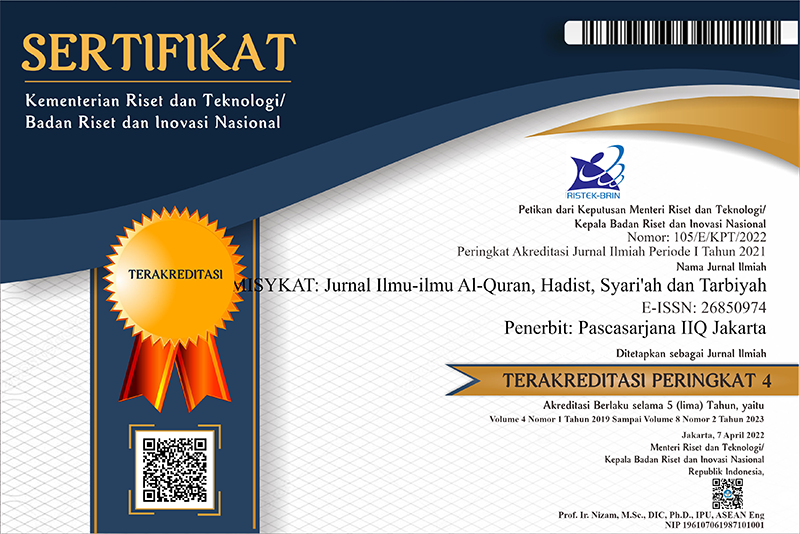
PERNIKAHAN WANITA YANG HAMIL DI LUAR NIKAH DAN AKIBAT HUKUMNYA
Telaah Atas Dualisme Fikih dan Kompilasi Hukum Islam
Abstract
Differences between the rules of fiqh and the Compilation of Islamic Law (KHI) in deciding the same cases often create a dualism that forces Muslim society to choose, given that fiqh has long been a living law in Muslim society and the main foundation for resolving social problems, whereas the KHI only emerged in Indonesia in 1991 as the result of the collective ijtihad of Indonesian Islamic legal experts, based on the fiqh works of the imams of the schools of law and adapted to the conditions of Indonesian Muslim society. This article shows that the KHI is still weaker in society than fiqh, owing to its limited dissemination and to differences between the rules of the KHI and fiqh that create a dualism in social problems, such as the marriage of a woman pregnant outside marriage and its legal consequence, namely the lineage (nasab) of the child born of that marriage. In the Religious Courts, however, the KHI is the main reference for judges in deciding cases. Even so, the final decision rests with the decision-maker to apply whichever rule he or she believes brings benefit to society, since both fiqh and the KHI are products of ijtihad that are relative and not absolutely binding; indeed, according to Abdul Gani Abdullah, not using fiqh or the KHI is not sinful, but leaving social problems in society without a solution is. This article agrees with Islamic legal experts who hope for a meeting point between the rules of fiqh and the KHI through the evaluation and refinement of the KHI, so that the KHI, as Indonesian fiqh, can be applied comprehensively and provide solutions to social problems.
References
Ad-Dimasyqi, Abu „Abdillah Muhammad bin „Abdi ar-Rahman, al-„Utsmani asy-Syafi‟i, Rahmatu al-Ummah fi Ikhtilafi al-A‟immah, t.tp : Maktabah al-Taufiqiyah, t.th.
Ad-Dimyathi, Abu Bakar „Utsman bin Muhammad Syatha, Hasyiyah I‟anatu ath-Thalibin, Jilid I, cet.ke-12, Beirut :
Dar al-Kutub al-Ilmiyah, 2014.
Al-„Abadi, Abdullah, Syarh Bidayah al-Mujtahid wa Nihayah alMuqtashid, cet. ke-1, Cairo : Dar as-Salam, Juz III, 1995.
Al-Bukhari, Abu Abdillah Muhammad bin Isma‟il, Shahih alBukhari, Riyadh : Bayt al- Afkar ad-Dauliyyah, 1998.
Ali, Mohammad Daud, “Hukum Islam : Peradilan Agama dan Masalahnya”, dalam Eddi Rudiana Arief, dkk, (ed.), Hukum Islam Di Indonesia Pemikiran Dan Praktek, cet. ke-1, Bandung : PT. Remaja Rosdakarya, 1991.
…………, Asas-asas Hukum Islam (Hukum Islam I) Pengantar Ilmu Hukum dan Tata Hukum Islam di Indonesia, cet. ke-2, Jakarta : Rajawali Pers, 1991.
…………, Hukum Islam, Pengantar Ilmu Hukum dan Tata Hukum Islam di Indonesia, edisi ketiga, cet. ke-3, Jakarta : RajaGrafindo Persada, 1993.
Al-Jaziri, Abdu ar-Rahman, Kitabu al-Fiqh „ala al-Mazahib alArba‟ah, Beirut : Dar al-Fikr, Juz IV, 2011.
Al-Kasani, „Ala„u ad-Din Abi Bakr bin Mas‟ud, al-Hanafi, Bada‟i‟u ash-Shana‟i‟ fi Tartib asy-Syara‟i‟, Juz III, cet. ke-2, Beirut : Dar al-Kutub al-„Ilmiyah, 2003.
Al-Mahalli, Husain bin Muhammad, as-Syafi‟i, Al-Ifshah „an „Aqdi an-Nikah „ala al-Mazahib al-Arba‟ah, cet. ke-1, Syiria : Dar al-Qalam al-„Arabi, 1995.
Al-Qarafi, Abu al-„Abbas Ahmad bin Idris Shonhaji, Al-Furuq (Anwar al-Buruq fi Anwa‟i al-Furuq), cet. ke-1, Beirut :
Dar al-Kutub al-Ilmiyah, Juz II, 1998.
…………, Adz-Dzakhirah, cet. ke-1, Beirut : Dar al-Gharbi alIslami, Juz IV, 1994.
An-Nawawi, Abu Zakariya Muhyi ad-Din bin Syaraf, Kitab alMajmu‟ Syarh al-Muhadzdzab li asy-Syairazi, cet. ke-1, Jeddah : Maktabah al-Irsyad, Juz XVII, t.th.
As-Sajastani, Abu Dawud Sulaiman bin Asy‟ats, Sunan Abi Dawud, Riyadh : Al-Ma‟arif, 1424 H.
As-Subki, Tâjuddin, Jam‟u al- Jawami‟ fi Ushul al-Fiqh, cet.ke-
4, Beirut : Dar al-Kotob al-„Ilmiyah, 2013.
As-Suyuthi, Jalaluddin, Al-Asybah wa an-Nazha‟ir fi Qawa‟id wa Furû‟i Fiqh asy-Syafi‟iyyah, Cairo : Dar al-Hadis, 2013.
Asy-Sya‟rani, Abu al-Mawahib „Abdu al-Wahhab bin Ahmad bin „Ali al-Anshari, Al-Mizan al-Kubra, Beirut : Dar al-Fikr, Juz II, t.th.
Asy-Syarbini, Syamsu ad-Din Muhammad bin Khatib, Mughni al-Muhtaj, cet. ke-1, Beirut : Dar al-Ma‟rifah, Juz III, 1997.
Asy-Syirazi, Abu Ishaq Ibrahim bin Ali bin Yusuf al-Fairuz Abadi, Al-Muhadzdzab fi Fiqh al-Imam asy-Syafi‟i, Juz II, cet. ke-1, Beirut : Dar al Kutub al-„Ilmiyyah, 1995.
Attamimi, A. Hamid S., “Kedudukan Kompilasi Hukum Islam Dalam Sistem Hukum Nasional, Suatu tinjauan dari Sudut Teori Perundang-undangan Indonesia, dalam Amrullah Ahmad (et.al), Dimensi Hukum Islam Dalam Sistem Hukum Nasional : Mengenang 65 Th. Prof. Dr. H. Busthanul Arifin, SH., cet. ke-1, Jakarta : Gema Insani Press, 1996.
Az-Zuhaily, Wahbah, Al-Fiqh al-Islami wa Adillatuh, cet. ke-2, Damaskus : Dar al-Fikr, Juz VII, 1985.
…………, Ushul al-Fiqh al-Islami, Juz I, cet.ke-1, Damaskus : Dar el-Fikr, 1986.
Ba‟alawi, Abdu ar-Rahman bin Muhammad bin Husain bin „Umar, Bughyat al-Mustarsyidin, cet. ke-5, Beirut : Dar al Kutub al-„Ilmiyah, 2016.
Bisri, Cik Hasan, Kompilasi Hukum Islam Dalam Sistem Hukum Nasional, cet. ke-1, Jakarta : Logos Wacana Ilmu, 1999.
Departemen Agama, Kompilasi Hukum Islam, Bandung : Humaniora Utama Press, 1991.
Gunawan, Edi, “Pembaruan Hukum Islam Dalam Kompilasi Hukum Islam”, dalam Hunafa : Jurnal Studia Islamika, Vol. 12, No. 1, Desember 2015.
Harahap, M. Yahya, ”Informasi Materi Kompilasi Hukum Islam : Mempositifkan Abstraksi Hukum Islam”, dalam Cik Hasan Bisri (et.al), Kompilasi Hukum Islam Dalam Sistem Hukum Nasional, cet. ke-1, Jakarta : Logos Wacana Ilmu, 1999.
Humaedillah, Memed, Status Hukum Akad Nikah Wanita Hamil dan Anaknya, Jakarta : Gema Insani, cet.ke-1, 2002;
Ibn Qudamah, Abu Muhammad bin „Abdillah bin Ahmad bin Muhammad, al-Hanbali, Al-Mughni, Juz IX, cet. ke-3,
Riyadh : Dar „Alam al-Kutub, 1997.
Irfan, M. Nurul, Nasab & Status Anak dalam Hukum Islam, cet.ke-1, Jakarta : AMZAH, Edisi kedua, 2013.
Jasmani, Pembenaran Teoritis Tentang Keabsahan Anak (Analisis Metodologik Pasal 99 dan 100 Kompilasi
Hukum Islam), Watampone : Luqman al-Hakim Press, 2013.
Khallaf, Abd. Wahhab,„Ilmu Ushul al-Fiqh, cet.ke-8, Cairo :
Da‟wah Islamiyah Syabab al-Azhar, 1956.
Komisi Fatwa MUI DKI Jakarta, Kumpulan Fatwa MUI Provinsi DKI Jakarta 1975-2012, Jakarta, 2012.
Manan, Abdul, Aneka Masalah Hukum Perdata Islam di Indonesia, cet. ke-4, Jakarta : Prenadamedia Group, 2014.
Manan, Abdul, Reformasi Hukum Islam di Indonesia, cet. ke3,Jakarta : PT. RajaGrafindo Persada, 2013.
Muamar, Afif, “Tinjauan Hukum Islam Terhadap Penetapan Wali Hakim Bagi Anak Perempuan yang Lahir Dâri Perkawinan Hamil (Studi Komparasi di KUA Sewon dan KUA Kotagede)”, Yogyakarta : Fakultas Syari‟ah Jurusan Al-Ahwal Asy-Syakhsiyyah UIN Sunan
Kalijaga, 2009.
Mukarromah, Haima Najachatul, “Proses Pelaksanaan Perwalian Anak Luar Nikah berdasarkan Hukum Islam dan Hukum Positif di KUA Kecamatan Selogiri Kabupaten Wonogiri”, Yogyakarta : Program Pascasarjana UIN Sunan Kalijaga Program Studi Hukum Islam Konsentrasi Hukum Keluarga, 2015.
Muslim bin al-Hajjaj, Abu al-Husain, Shahih Muslim, Riyadh : Bayt al-Afkar ad-Dauliyyah, 1998.
Musy‟al, Mahmud Isma‟il Muhammad, Atsaru al-Khilaf alFiqhiy fi al-Qawa‟id al-Mukhtalaf Fiha, Cet.ke-2, Cairo : Dar as-Salam, 2009.
Ramulyo, Mohd. Idris, Hukum Perkawinan, Hukum Kewarisan, Hukum Acara Peradilan Agama dan Zakat Menurut
Hukum Islam, cet.ke-4, Jakarta : Sinar Grafika, 2006.
Rofiq, Ahmad, Hukum Islam Di Indonesia, cet. ke-1, Jakarta : RajaGrafindo Persada, 1995.
Sâbiq, Sayyid, Fiqh as-Sunnah, cet. ke-4, Beirut : Dar al-Fikr, Juz II, 1983.
Sakirman, “Tela‟ah Hukum Islam Indonesia Terhadap Nasab
Anak” dalam Hunaifa : Jurnal Studia Islamika, Vol. 12, No. 2, Desember 2015.
Siregar, Bismar, “Hukum Islam Sebagai Institusi Keagamaan”, dalam Eddi Rudiana Arief, dkk, (ed.), Hukum Islam Di Indonesia Pemikiran Dan Praktek, cet. ke-1, Bandung :
PT. Remaja Rosdakarya, 1991.
Syarifuddin, Amir, Hukum Perkawinan Islam di Indonesia : Antara Fiqh Munakahat dan Undang-Undang Perkawinan, cet.ke-3, Jakarta : Kencana Prenada Media Group, 2009.
Tim Penyusun Ditjen. Bimas Islam dan Penyelenggaraan Haji Depag RI, Pedoman Pejabat Urusan Agama Islam, Edisi 2004.
Wizarah al-Awqaf wa asy-Syu‟un al-Islamiyyah, Al-Mawsu‟ah al-Fiqhiyyah, Juz I, cet.ke-2, Kuwait, t.p, 1983.
Yanggo, Huzaemah Tahido, Fikih Perempuan Kontemporer, cet. ke-1, Bogor : Ghalia Indonesia, 2010.
Yayasan Penyelenggara Penterjemah/Pentafsir Al-Qur‟an, Al-
Qur‟an dan Terjemahnya, Madinah : Pencetakan AlQur‟an Khadim al-Haramain asy-Syarifain Raja Fahd, 1412 H.
Zahrah, Muhammad Abu, Al-Ahwal asy-Syakhshiyyah, cet. ke-3, Cairo : Dar al-Fikr al-„Arabi, 1957.
Zakariya al-Anshari, Abu Yahya Zakariya bin, Fathu al-Wahhab bi Syarhi Minhaju ath-Thullab, cet.ke 2, Cairo :
Maktabah asy-Syuruq ad-Dawliyah, 2013.

This work is licensed under a Creative Commons Attribution-ShareAlike 4.0 International License.
Copyright Notice
Copyright and Licensing Terms of Jurnal MISYKAT
Authors who publish their work in Jurnal MISYKAT agree to the following terms:
-
Copyright Retention: Authors retain full copyright ownership of their articles without any restrictions.
-
Right of First Publication: Authors grant Jurnal MISYKAT the right of first publication, allowing the journal to publish and distribute the work simultaneously in both print and electronic formats.
-
Creative Commons Licensing: All articles published in Jurnal MISYKAT are licensed under a Creative Commons Attribution-ShareAlike 4.0 International License (CC BY-SA 4.0).
What does this mean for authors and readers? Under this license, anyone is free to:
Share: Copy and redistribute the material in any medium or format.
Adapt: Remix, transform, and build upon the material for any purpose, even commercially.
Under the following strict conditions:
Attribution: You must give appropriate credit, provide a link to the license, and indicate if changes were made. You may do so in any reasonable manner, but not in any way that suggests the licensor endorses you or your use.
ShareAlike: If you remix, transform, or build upon the material, you must distribute your contributions under the same license as the original.
-
Self-Archiving Policy: Authors are permitted and highly encouraged to post their work online (e.g., in institutional repositories, open-access repositories, or on their personal websites) after the official publication process is complete. This practice is encouraged as it can lead to productive academic exchanges, as well as earlier and greater citation of the published work.
Privacy Statement (Recommended addition for OJS)
The names and email addresses entered in this journal site will be used exclusively for the stated purposes of this journal and will not be made available for any other purpose or to any other party.